The mmCIF (PDBx as in extended PDB) format is meant to replace PDB format. Soon the RCSB PDB will have to adopt 4-letter codes for novel chemical components, which will break the PDB format. PDBx format is space separate as opposed to the really annoying column position in the PDB format and in the PDBx format the metadata can be stored in a nearly sensible manner. However, PDBx is solely a deposition format, but it is not really used as analysis format regardless of what the PDB claims. I personally had to add support for it because a reviewer asked me to. This lack of adoption is often attributed to the "if it ain't broken don't fix it" principle. Although I personally would argue that it may due to how it's implemented: opening a PDBx from one program ought to work in another, but this is not often the case. An example of this is PyMOL files read in PyRosetta.
Sunday, 5 February 2023

Saturday, 2 April 2022
Covalents, patches and N-O-S bridges in PyRosetta
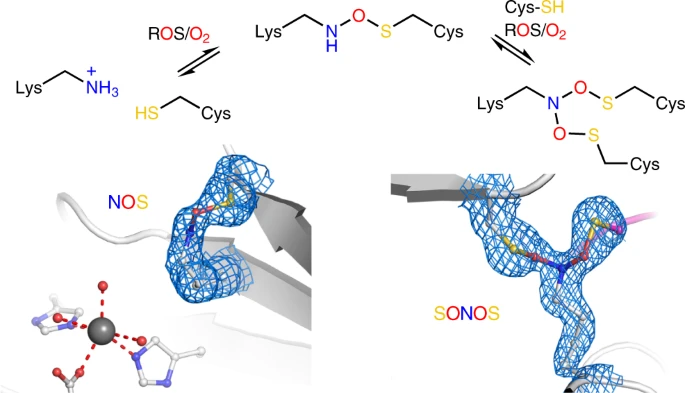
PyMOL will strip LINK entries from PDBs on saving while NGL obeys only CONECT entries in PBDs. An exception is PyRosetta: it behaves very nicely with disulfides, isopeptide bonds ( cf. repo of PyRosetta code from Keeble et al.) and other crosslinks —mostly. As a result I thought I'd add a note on how to add them in PyRosetta.
Sunday, 17 October 2021
Filling missing loops by cannibalising AlphaFold2
 |
| I could not resist this Photoshop. But the process is not as dramatic and the results not as bad as Temple of Doom... If done right. |
Monday, 23 August 2021
Tweaking AlphaFold2 models with PyRosetta
In a previous post I explored the pitfalls of an AlphaFold2 model from EBI. Here I thought I'd share some PyRosetta methods that may be handy to use with AlphaFold2 models.
Wednesday, 7 July 2021
Per residue RMSD

Recently I calculated the local RMSD caused by each residue and I thought I'd share the methods I used using PyRosetta —it is nothing at all novel, but I could not find a suitable implementation. The task is simple given two poses, find out what residue's backbone is changing the most by scanning along comparing each a short peptide window from each.
Monday, 26 April 2021
Remodel in Pyrosetta

The Rosetta binary Remodel is a great tool as it allows interesting designs to be made. However, it is rather incompatible with Rosetta Scripts and Pyrosetta as it is heavily dependent on command line options for customisation and repeats some of the processes internally. Despite this, it can be cohersed rather effectively to work in Pyrosetta with some convenience and this is how.
Saturday, 31 October 2020
XML to Pyrosetta: EvolutionaryDynamicsMover as an example

Tuesday, 27 October 2020
Pyrosetta scripting without a manual
I got recently asked how to figure out how to write a Pyrosetta script when there is no example. This is definitely the biggest weakness of Pyrosetta and Rosetta script, but it is not insurmountable. In fact, there is a wealth of information that is hidden that can be mined. Here is how and in the next post, I give an example.
Wednesday, 7 October 2020
Rosetta/Pyrosetta on a cluster or in the cloud
Due to licensing Rosetta and Pyrosetta cannot be installed via apt-get/pip but has to be downloaded from the Rosetta Commons website. This makes things harder if you are in a colabs notebook, ssh'ed into a machine or running off a remote jupyter notebook. Luckily it actually is straightforward.
Saturday, 8 August 2020
Stay hydrated

Tuesday, 21 July 2020
Switching ligand in a PDB with Fragmenstein

Saturday, 4 July 2020
Filling missing loops —the proper way

Since posting this, I realised one can do it even faster by hijacking the threading algorithm, which albeit not it's intended purpose works fine for fixing a structure without supervision —which the following discussed methods do.
Monday, 8 June 2020
Love thy neighbours, but select them with caution
NeighborhoodResidueSelector behaves differently than PyMOL's expand selector and it is good to be aware of it. Namely, in PyMOL the distance is from any atom, while in Rosetta it is from the center of mass atom, unless specified differently. In reality CloseContactResidueSelector works like PyMOL's expand selector.Sunday, 19 April 2020
How to set up an electron density scorefunction in Pyrosetta
Friday, 21 February 2020
Working around segmentation faults of pyrosetta: threads & processes

Tuesday, 18 September 2018
Everything you wanted to know about isopeptide bonds in Rosetta, but were too afraid to ask
