
A question (of the nice variety) that students sometimes ask is about the relevance of natural products. The answer is a yes-and-no answer. I like to add an evolutionary take to the usual arguments, which is two-sided. A lot of secondary metabolites made by plants have evolved to kill you (mostly a herbivore), but your liver has evolved to be good at destroying them. For drug discovery, this has two opposite effects: the pro is a long list of antibacterial, antifungal and anticancer compounds to use or to adapt, the con is that their ADME (absorption, distribution, metabolism, and excretion) properties have frustrated medchemists for decades and decades. Herein, the two faces of this coin are explored not by advocating for or against natural products, but by exploring what they mean for medicinal chemistry.
Caveats
Herein, I am going to go over the full history, and majorly the pros and cons of natural compounds in drug discovery. I want to instead talk about what evolution means for natural products in drug discovery.
I am trying not to take sides, but, despite loving the biosynthesis of secondary metabolism, I am on the side of the detractors of natural products in contemporary drug design.</>
When talking about evolution, the language gets stilted when trying to be fully accurate. Species, and kind of as a consequence, genomes, evolve, whereas proteins and small compounds do not evolve. Protein families could be said to evolve even though a mutation happens in DNA, not a protein. Therefore, when I say "a natural product evolved", what I mean to say is "the genes encoding the enzymes involved in the pathway that produces a compound', which is worse than ChatGPT verbiage. The other error I make below is to make Nature or Evolution sound sentient. I should therefore stress that all reasons for a compound being selected are causal (happen because of a cause) not teleological (happen towards a goal).
Naturalia non sunt turpia

"Quod naturalia non sunt turpia" is a common quote (actually a paraphrasing) from Virgil that you see written places trying hard to be fancy about their all natural ingredients —I last saw it on a wall in a microbrewery shop. The quote means what is natural is not foul, but in the original meaning was that nature is amoral, not that it is healthy. Do not get me wrong, I (mostly) eat vegetable over junk food and I do agree that the food industry does have a lot to be blamed for, but the remote evolutionary history of natural food did not care that you are healthy: plants do not exist to be helpful, they exist because they evolved to survive (with a recent farming twist).
Natural products are metabolic products of biochemistry. Primary metabolism products are essential for growth, while secondary metabolism increases fitness, commonly by preventing predation or knee-capping competition. Organisms such as plants, fungi or bacteria do not want to be eaten by herbivores or attacked by viruses, fungi and bacteria and often have highly evolvable secondary metabolism pathways thanks to plasticity endowed by unrestricted broad specificity / promiscuity. Plants are especially packed with phytoalexins (induced antimicrobial defence compounds) and phytotoxins. Few people are foraging hunter-gatherers, so it is not commonly appreciated that a lot of plants and fungi are toxic —did you know you cannot eat daffodil bulbs? Basically, Nature does not want to increase your lifespan, but actually wants to kill you or its infection —hence the many antibiotics, narcotics, chemotherapy or immunosuppressants, but very few compounds for specific ailments.
Cancer is uncontrolled cell proliferation: curing cancer consists of killing these cells without killing all other cells. Many phytotoxins are good at the first part, not so much at the second. When talking of drug safety, the concept of therapeutic window (the gap between being effective and toxic) is used: most phytotoxins are not specific enough to be effective or safe, but some happen to be. (Strychnine, ricin and other very biologically active poisons that are synthesised at scale are not classed as pharmaceuticals)
Total synthesis

Many historical FDA drugs were derived from natural products, but had the major challenge of being hard to make by humans (i.e. total synthesis, not biosynthesis). The history of penicillin G is fascinating for example — John Sheehan in 1957 managed the total synthesis of the analogue penicillin V in 11 steps, with the ring lactam as a neat domino reaction, whereas Penicillium rubens does it in three steps, the second closing the ring is done by isopenicillin N synthase, an Fe(II)- and dioxygen-dependent oxidase related to αKG-dependent oxygenases, but not itself dependent on αKG, putting the synthetic chemists to shame.
In 2014 I attended a Gordon Research conference on Biocatalysis and one panel topic was why the biocatalysis revolution had not come about (yet). Sadly, this is still true today: enzymes can win you Green Chemistry awards, but they are not the easiest to scale. Namely, biosynthetically advanced compounds suffer from poor yields, hence the need for total synthesis, which in some synthetic routes would scare even Cthulhu.

Paclitaxel (taxol) is probably the archetype of natural product whose total synthesis is diabolical. The main ring system, taxadiene, is made by the usual single step terpene cyclisation by biosynthesis, whereas it takes well over two dozen steps by total synthesis.

Frequently FDA compounds are made semisynthetically, even at scale —vitamin C is one such example, which is made from glucose syrup. This applies also to some more recent, designed compounds such as Oseltamivir. Oseltamivir (Tamiflu), FDA approved in 1999 (so relatively recently), is derived from shikimate, a common metabolite, and at first required shikimate extracted from star anise which is how it started —shikimate pathway is how the aromatic amino acids. Even though the compound is near ubiquitous, these plants do make a lot of shikimate derivatives, for example anethole, the aniseed aroma compound (derived from phenylalanine via the usual cinnamic acid). In other words, not all bio-inspired 3D compounds are scary and biosynthetic building blocks are not unheard of.

Parenthetically, I should note that I am talking of trends, as there are obviously exceptions. A counter-example is midostaurin (and lestaurtinib in clinical trials) which is a recently (2017) approved derivative of staurosporine, a fun-looking mostly planar alkaloid from a streptomycete.
Metabolism
Biosynthesis space

It is true that enzymes can achieve great feats of catalysis, but the space is actually rather limited and most compounds can be traced back to a few building blocks, such as central metabolites, polyisoprenyl-diphosphates, coumaric acid or cinnamic acid —it is fairly easy to stare at a given compound and figure out how it was biosynthesised, especially when there are many methyl groups that give terpenoids away, or hydroxyls and ketones giving polyketides away. The magic of enzymes comes from the selectivity not diversity of reactions. Pictured is nepetalactone, the active compound (for cats) in catnip: the geranyl-DP atoms can be easily spotted by starting at the ester and following the scaffold around.
Pharmacokinetics
A consequence of the natural role of natural products is that our body is well evolved to not get poisoned easily. Pigments in food are a visual proof —you don't turn blue or pee blue if you eat blueberries (malvidin, an anthocyanin). This means that absorbed natural products are more likely to be broken down by cytochromes in the liver than more exotic compounds. Cytochromes are very proficient in the oxidation of methyl groups due to the isoprenyl building block, hence why these are commonly fluorinated in drug design. The methyl groups were evolutionarily selected to be there in the first place likely because cyclisation is easier thanks to the Thorpe–Ingold effect. Large high sp3 compounds are the target of cytochrome P450 3A4 for example, while aromatic compounds are generally targeted more slowly by others like 1A2 or 2C9. Molecules absorbed from the digestive tract go into a vein that passes through the liver, a safety mechanism / medchem effect known as first pass metabolism greatly diminishing oral bioavailability of compounds.
The blood brain barrier exists to stop infections spreading to the brain and to filter out toxins. Capillary structure varies between tissues: many capillaries are continuous and non-fenestrated, while fenestrae, where present, are pores through endothelial cells. At the blood–brain barrier, non-fenestrated endothelial cells, tight junctions, selective transporters and low transcytosis tightly restrict movement from blood into the brain. So natural products are in part to blame for why neuronal targets are really hard in drug discovery!
Taken as intended
Antibiotics, antifungals and antivirals are small molecules that are made by the host to fight infections within the host: they have the strongest case as demonstrated by the endless list of antibiotics (penicillin, cephalosporin, vancomycin, chloramphenicol etc.), and antifungals (nystatin, fluconazole, micafungin etc). To this grouping one can easily add naturally derived insecticides, most notably pyrethrin derivatives (permethrin, deltamethrin and cypermethrin), some of which are used in veterinary spot-on treatments. That does not make them safe to inhale: exposure risk depends on the compound, formulation and dose, and sprays or dust can irritate the airways.
Virus infections in plants are primarily fought by silencing RNA and viruses operate in very diverse ways. Natural neuraminidase inhibitors do exist, albeit with limited efficiency. Oseltamivir as mentioned is derived from shikimate (a decorated cyclohexene), but is much larger and much much more potent. Most studies into herbal remedies against a viral infection identify a compound that is very weak.
That was the plan
The other category mentioned is to stop predation. One can conjecture a few routes for this:
- Killing the predator by cardiac arrest: aconitine (from Aconitum plants)
- Killing the predator by paralysis: tetrodotoxin (puffer fish)
- Dissuading predation: amarogentin (one of the most bitter compounds known) or capsaicin (mimics a fire response, which is rather neat and I would not have thought of it)
- Triggering reckless behaviour in weird ways: LSD
- Putting the predator to hypnotic sleep: morphine
- Putting the predator in hypoglycemic coma: galegine (led to metformin)
- Putting the predator to restorative sleep: nothing. Serotonin would seem like an easy compound to mimic, but as far as I know this is not done — 5HTP is a shared metabolite for serotonin and for whatever the Griffonia plant wants to make, while the bioactive ingredients in chamomile extract are just small greasy compounds, which happen to cross the blood brain barrier.
- Keeping the predator youthful by activating telomerases: what, why?!
Regarding the latter, astragaloside (TA-65) activates telomerases, but it might be a promiscuous unintended effect rather than what it evolved for in the Astragalus plant. Resveratrol, a simple poly-hydroxylated stilbene from grapes, was claimed as telomerase activator, and by consequence a health benefit of drinking wine...
Don't look at hibernating Gila monsters
A parenthesis needs to be made for semaglutide: this biologically inspired drug is by far one of the pharmaceutical blockbusters of the decade. The GLP-1 drug story was helped along by exendin-4, isolated from Gila-monster venom. That discovery inspired GLP-1 receptor agonist drug development: exenatide is based directly on exendin-4, whereas semaglutide is an engineered analogue of human GLP-1, not a derivative of the lizard peptide. The link is inspiration rather than direct derivation. These are peptides acting on a hormone-signalling pathway involved in glucose control and appetite regulation. They amply demonstrate that studying the natural environment can be extremely fruitful, but that does not by itself establish the value of screening natural small compounds from different phyla of life.
Coincidental repurposing
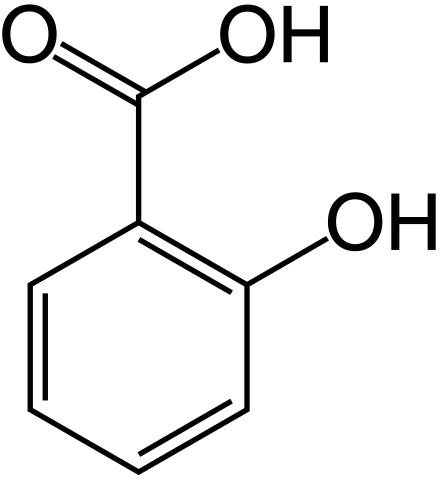
So far I have been talking of natural products that activate or inhibit a target protein in the same way as it was evolved to often to different effects (e.g. mandrake evolved to produce scopolamine and to cause delirium to incapacitate not help shamans). Several pharmaceuticals have been repurposed either by leveraging protein-ligand binding with close paralogous proteins or rebalancing issues within the same pathway, however there are very few examples where a drug-like compound binds an utterly different target and works wonders. Salicylic acid (ortho-hydroxylbenzoate), a signalling compound from willow trees binds to several targets in plants, mainly NPR1 to trigger stress response. In humans, it is found in topical anti-inflammatory creams (eg. Bongela) yet plants have a different immune response! The thing is, it is only 138 Da, making it more of a fragment than a drug. Its O-acetyl derivative, aspirin, is used as a non-steroidal anti-inflammatory as it binds (both) COX enzymes more strongly as it's a covalent inhibitor, but it is also promiscuous as its many side-effects and off-label uses attest, plus ideally only COX2 should be inhibited. As a consequence, salicylic acid is an exception not the rule and most natural products are much larger. So what about screening natural products against targets that would not make evolutionary sense (i.e. fortuitously bind)? Here lie three different but valid arguments: (a) the a priori probability of a compound binding efficiently a target diminishes the larger it is, and (b) the probability of a compound binding a given protein is higher if it can bind another protein, and (c) Nature is messy, who can tell why a biosynthetic pathway for a compound was selected by evolution and if even selected (secondary metabolism operates in the realm of near-neutral drift and future plasticity). The first point is extremely strong when considering that a blind docking screen is considered successful with a 1-5% validated hit rate, i.e. from compounds expected to bind. Natural product screens do give some hits, but at high concentrations and with really weak affinity, making the effort of scaling the compound down arduous. The second point overlaps with the questions of library design, which can be heavily assay dependent, and has been discussed at length in the literature (example), but it is a highly valid point —even the group of Jean-Louis Reymond make a variant of GB13 (a 13 atom enumeration of chemical space) that was enriched for bioactive fingerprints. Unfortunately, the murkiness of trying to conjecture for what reason, if any, a compound exists borders on the philosophical, so it is not easy to dismiss that there is no advantage for a plant, fungus or bacterium to make a compound that affects a protein in some pathway that is involved in a specific pathology.
Conclusion
In broad terms, modern drug design has mostly moved away from natural products, to avoid the complicated total synthesis, to avoid weak binders, to avoid metabolism and to speed up drug campaigns. However, the evolutionary fight of natural products has sculpted our physiology and a lot of the inconveniences in drug discovery come from this and can be explained in an evolutionary context. Natural products were the first modern drugs and have sculpted drug development, so understanding these is essential. Natural products can be great inspirations for a mode of action, or source of building blocks. In my opinion therefore, the important thing is not to be naïve by hoping that Nature has already made a compound that targets an ailment that is irrelevant to other organisms.
...Now, it's time for my weekly dose of resveratrol to activate my telomerases!
No comments:
Post a Comment